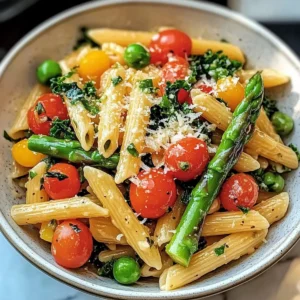

As I strolled through the farmers’ market last weekend, the vibrant hues of freshly picked asparagus, sunny yellow squash, and plump grape tomatoes caught my eye. Inspired by the season’s bounty, I whisked them away to craft a delightful Spring Vegetable Pasta that perfectly captures the essence of spring. This dish not only dazzles the eyes but also promotes a quick and wholesome dining experience, making it ideal for busy weeknights. With its customizable nature and the option for a vegan twist, this recipe is a celebration of vegetables bursting with life. Ready to dive into a bowl of spring goodness and explore how to make this culinary canvas your own? Let’s get cooking!
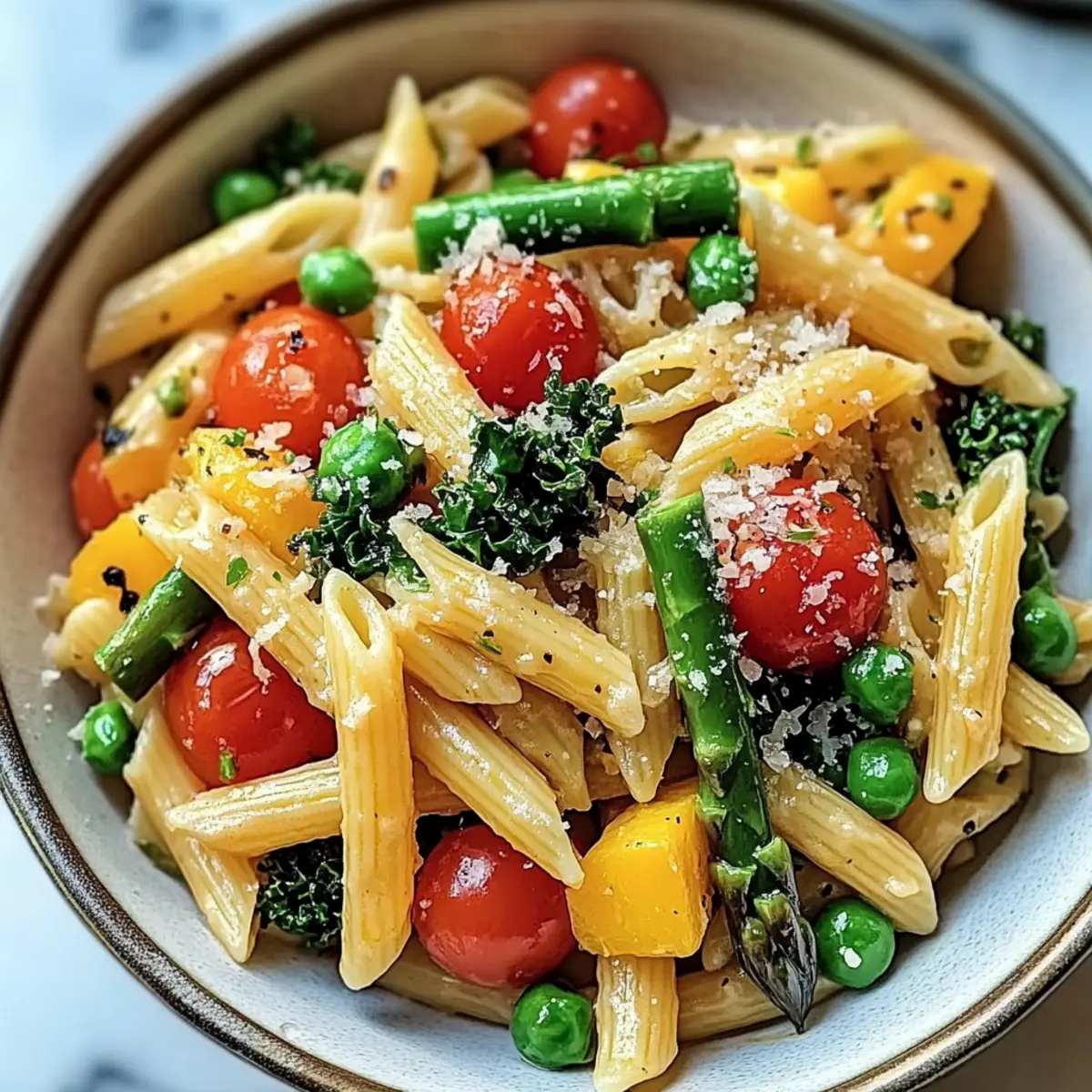
Why is Spring Vegetable Pasta a Must-Try?
Vibrant flavors ignite your taste buds with this seasonal dish, making it a true celebration of spring. Customizable to fit your cravings, you can easily swap in your favorite veggies or even add a protein boost. Quick and easy to prepare, this recipe is perfect for weeknight dinners without sacrificing quality. Wholesome ingredients like fresh kale, asparagus, and tomatoes ensure you’re enjoying a nutritious meal. If you enjoy this, don’t miss out on trying our Crock Pot Pasta or Garlic Butter Pasta for more delightful flavors!
Spring Vegetable Pasta Ingredients
• Get ready to bring spring to your table!
For the Pasta and Veggies
- Pasta – The hearty base of the dish; swap with farfalle or spaghetti based on your preference.
- Asparagus – Adds a crisp texture and vibrant flavor; choose fresh, firm stalks for the best results.
- Grape Tomatoes – Introduce sweetness and color; can be replaced with juicy cherry tomatoes if preferred.
- Yellow Squash – Provides a mild flavor and soft texture; zucchini is a great substitute if you like!
- Baby Kale – Offers vital nutrients and a pop of color; spinach is an excellent replacement option as well.
For Flavor and Finish
- Garlic – Enhances aroma and flavor; always use fresh cloves for the best impact.
- Extra Virgin Olive Oil – Perfect for sautéing the veggies and adding richness; feel free to use any light oil in its stead.
- Pecorino Romano Cheese – Adds creaminess and depth; opt for a plant-based cheese for a dairy-free version.
- Sea Salt & Black Pepper – Basic seasonings that bring all the flavors together; adjust to your taste for the best experience.
Step‑by‑Step Instructions for Spring Vegetable Pasta
Step 1: Prep Veggies
Start by washing and chopping the fresh asparagus into bite-sized pieces. Halve the grape tomatoes and dice the yellow squash to create a colorful medley of ingredients. Finally, rinse the baby kale under cold water and set aside. This prep will ensure the cooking process is quick and efficient, allowing the vibrant flavors of the Spring Vegetable Pasta to shine through.
Step 2: Cook Pasta
In a large pot, bring salted water to a rolling boil over high heat. Add your choice of pasta and cook according to package instructions until al dente, typically around 8-10 minutes. Make sure to taste a piece to check for doneness. Before draining, reserve about ½ cup of the starchy pasta water to help create your sauce later. Drain the pasta and set aside.
Step 3: Sauté Garlic
In a large skillet, heat a generous drizzle of extra virgin olive oil over medium heat. Once hot, add the finely chopped garlic and sauté for about 1 minute, or until fragrant and golden. Stir occasionally to prevent burning. The garlic aroma will fill your kitchen, setting the stage for the fresh flavors of your Spring Vegetable Pasta.
Step 4: Cook Asparagus
Add the chopped asparagus to the skillet and sauté for 3-4 minutes until it becomes slightly tender but still crisp. Stir regularly to ensure even cooking. The asparagus will brighten in color, signaling that it’s starting to soften. This step builds the foundation of freshness for your dish.
Step 5: Add Remaining Veggies
Now toss in the halved grape tomatoes and diced yellow squash to the skillet. Continue cooking for another 3-4 minutes, stirring occasionally until the vegetables are tender yet retain their vibrant colors. You want them to look inviting and fresh, embodying the essence of spring in your Spring Vegetable Pasta.
Step 6: Mix in Kale
Stir in the washed baby kale, along with a sprinkle of sea salt and black pepper to taste. Optional chili flakes can be added for a touch of heat. Cook for an additional 2 minutes until the kale wilts down and brightens. This final touch adds a lovely nutrition boost and a burst of color to your dish.
Step 7: Combine
Once the vegetables are ready, add the drained pasta directly to the skillet. Gradually incorporate the reserved pasta water as needed while tossing everything together. This will create a light, luscious sauce that clings to the pasta and veggies, making your Spring Vegetable Pasta cohesive and delicious.
Step 8: Serve
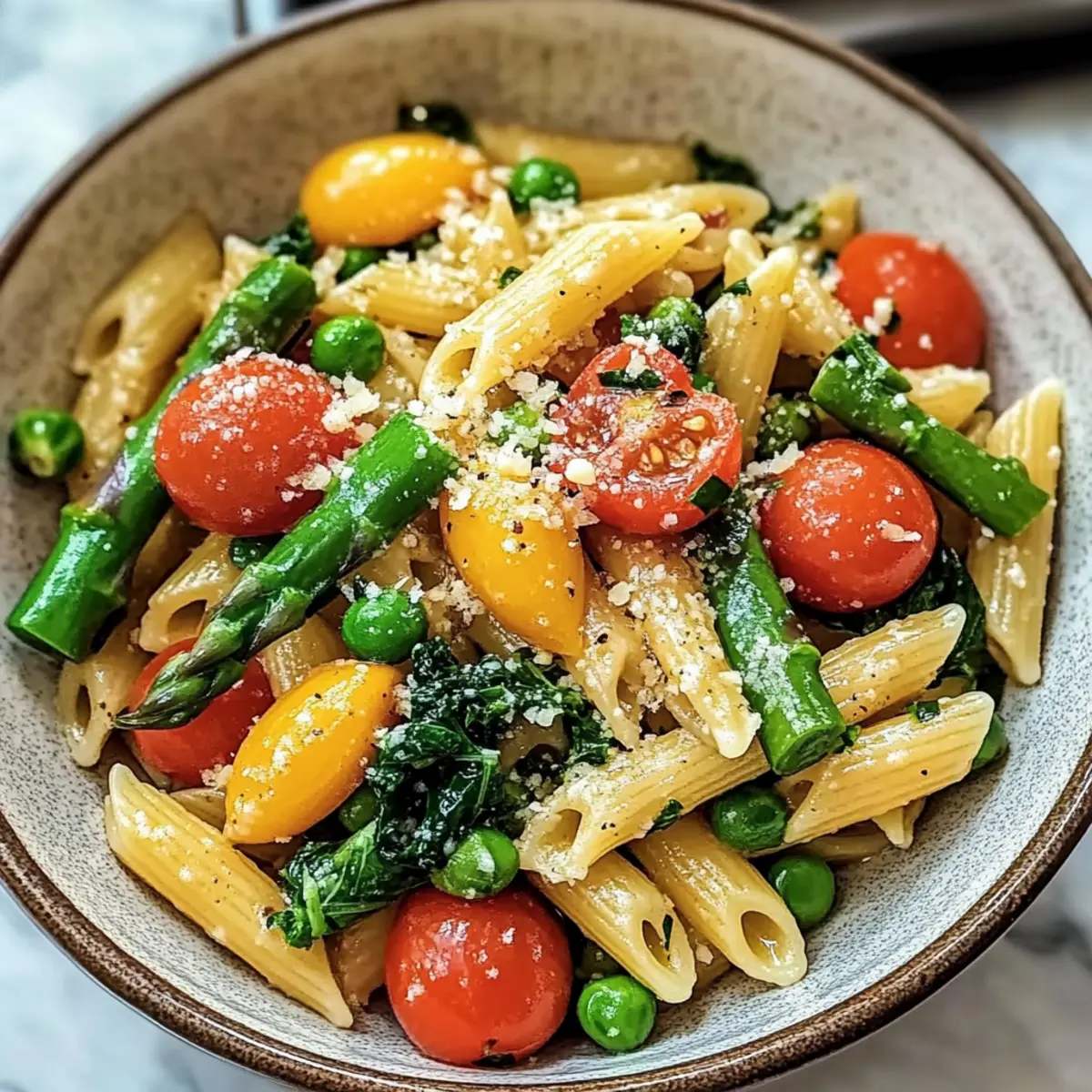
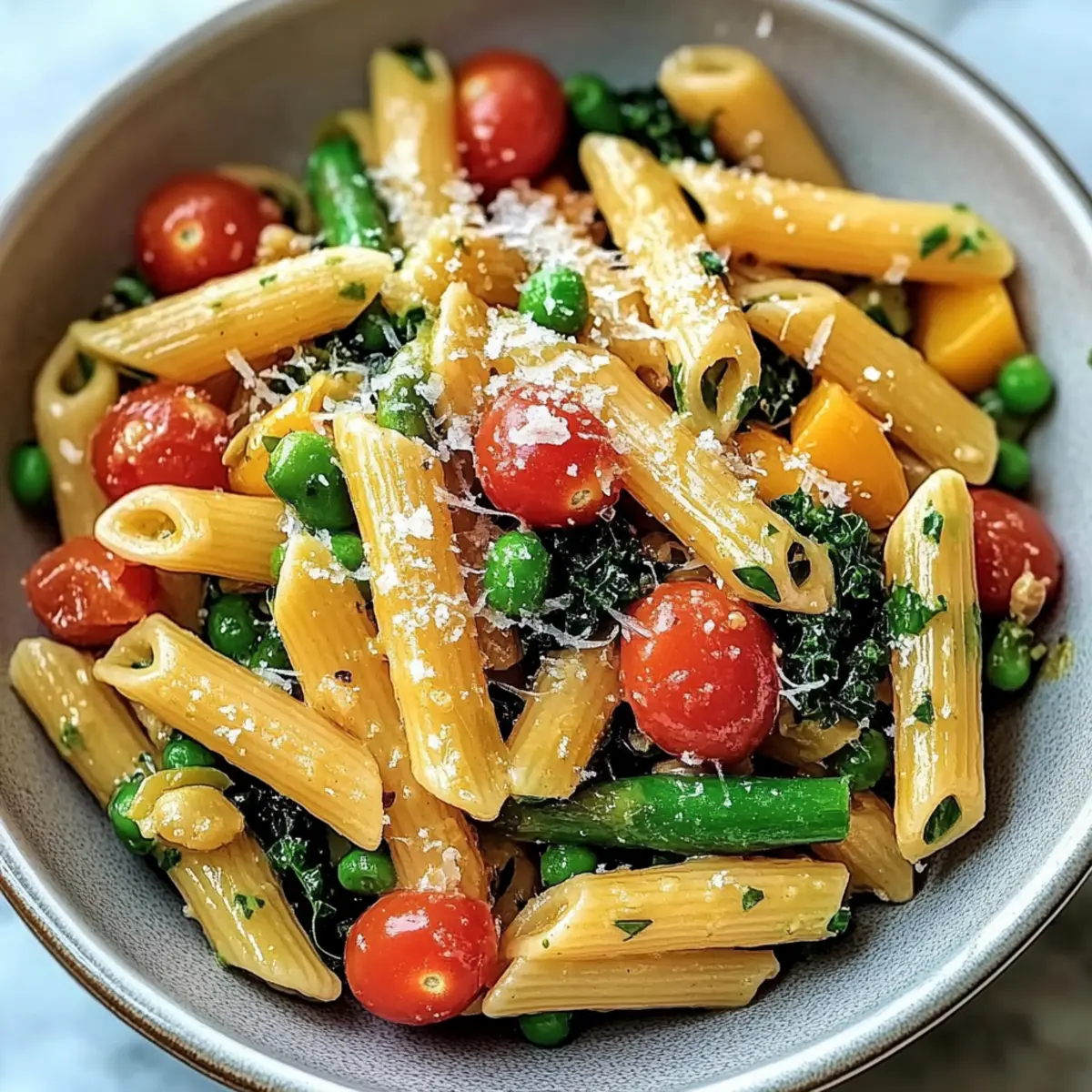
Remove the skillet from heat and garnish your colorful Spring Vegetable Pasta with freshly chopped parsley for added brightness. Serve warm, allowing everyone to enjoy the delightful flavors of spring. This dish pairs wonderfully with a light salad or some crusty bread for a complete meal experience.
Make Ahead Options
Spring Vegetable Pasta is a fantastic choice for busy weeknights, as many components can be prepped in advance! Chop the vegetables—such as asparagus, grape tomatoes, and yellow squash—up to 24 hours ahead and store them in an airtight container in the refrigerator. You can also cook the pasta, toss it with a bit of olive oil to prevent sticking, and refrigerate for up to 3 days. When it’s time to enjoy your meal, simply sauté the garlic and veggies until tender, add in the prepped pasta, and incorporate a splash of reserved pasta water to bring it all together. This way, you’ll have a delicious and vibrant Spring Vegetable Pasta ready in no time, with minimal effort!
Spring Vegetable Pasta Variations
Feel free to personalize your Spring Vegetable Pasta, transforming it into a dish that perfectly fits your palate and dietary needs!
-
Vegan Option: Substitute Pecorino Romano cheese with nutritional yeast or a dairy-free cheese to keep it fully plant-based. The result is equally flavorful and satisfying!
-
Protein Boost: Add grilled chicken, sautéed shrimp, or chickpeas to make the dish heartier. Each option provides an enticing flavor that complements the fresh vegetables beautifully.
-
More Color: Incorporate bell peppers or snap peas for added crunch and a splash of color. They’ll enhance the vibrant essence of your dish while providing extra nutrients.
-
Spice It Up: If you’re a fan of heat, toss in some red pepper flakes or a drizzle of sriracha to kick things up a notch. The balance of flavors will add an exciting twist!
-
Pasta Alternatives: Swap out traditional pasta for whole grain or gluten-free varieties, like brown rice pasta. They can provide different textures and flavors without losing the comforting base of the dish.
-
Herb Swap: Experiment with fresh herbs such as basil, thyme, or dill instead of parsley for a unique flavor profile. Each herb lends its own character to the dish!
-
Nutty Finish: Sprinkle toasted pine nuts or sliced almonds on top before serving. This adds crunch and a delightful nutty flavor that enhances the entire dish.
If you’re looking for more delicious options, you might also enjoy our Crock Pot Pasta or Garlic Butter Pasta to keep the meal exciting and fresh. Dive into creativity and make this dish your own!
Storage Tips for Spring Vegetable Pasta
- Fridge: Store your Spring Vegetable Pasta in an airtight container for up to 3 days. This keeps the flavors fresh while preventing moisture loss.
- Freezer: If you want to freeze the pasta, transfer it to a freezer-safe container after cooling. It can be stored for up to 2 months; just remember to thaw before reheating.
- Reheating: For best results, reheat in a skillet over medium heat. Add a splash of the reserved pasta water to maintain the texture and moisture of the dish.
- Room Temperature: Avoid leaving the Spring Vegetable Pasta out for more than 2 hours, as this can lead to food safety issues. Enjoy it warm or chilled!
Expert Tips for Spring Vegetable Pasta
-
Freshness Matters: Always opt for fresh, seasonal vegetables for the brightest flavors. Stale or wilted veggies can dull the vibrancy of your Spring Vegetable Pasta.
-
Perfect Pasta: Cook your pasta just until al dente. Overcooking can lead to mushy noodles, which won’t hold up well with the vegetables.
-
Reserve Wisely: Make sure to save that key ½ cup of pasta water! It’s essential for binding the sauce and achieving the right consistency.
-
Layering Flavors: Add garlic at the right moment to avoid burning. A fragrant sauté enhances the overall flavor of your Spring Vegetable Pasta.
-
Taste as You Go: Season throughout the cooking process. Tasting at different stages ensures your dish hits all the right notes for maximum enjoyment.
-
Get Creative: Don’t hesitate to substitute veggies or add proteins based on what you have on hand. This recipe’s customizable nature makes it perfect for experimenting!
What to Serve with Spring Vegetable Pasta?
Looking to enhance your vibrant Spring Vegetable Pasta experience? Here are some delightful pairings to create a full, satisfying meal.
-
Garlic Bread: The buttery, toasted crunch of garlic bread complements the fresh flavors and textiles in the pasta, perfect for scooping up those vibrant veggies.
-
Mixed Green Salad: Crisp greens with a light vinaigrette balance the richness of the pasta while adding a refreshing crunch. Toss in seasonal herbs to elevate the dish.
-
Lemon Herb Quinoa: This light and zesty side provides another layer of flavor and protein, making your meal heartier while harmonizing beautifully with the seasonal vegetables from the pasta.
-
Roasted Asparagus: Add even more of the star vegetable by roasting it with a sprinkle of olive oil and sea salt. Its natural sweetness intensifies alongside your Spring Vegetable Pasta for a wonderful harmony.
-
Chilled White Wine: Something like a Sauvignon Blanc or a dry rosé gently enhances the meal with its crisp notes, refreshing your palate between bites.
-
Berry Sorbet: A light, fruity dessert offers a delightful contrast to your savory dish and makes for a sweet finish to your delightful spring dining experience.
Spring Vegetable Pasta Recipe FAQs
What should I look for when selecting asparagus?
When choosing asparagus, look for fresh, firm stalks with vibrant green color and tightly closed tips. Avoid any stalks that are limp or have dark spots all over, as these indicate they may be past their prime. Fresh asparagus should snap easily when bent, and this crispness translates into a deliciously tender texture when cooked.
How long can I store leftover Spring Vegetable Pasta?
You can store leftover Spring Vegetable Pasta in an airtight container in the refrigerator for up to 3 days. To keep the flavors fresh and prevent the pasta from drying out, make sure the container is well-sealed. When you’re ready to enjoy your leftovers, stick the pasta in a skillet with a splash of reserved pasta water and gently reheat over medium heat for best results.
Advertisement
Can I freeze Spring Vegetable Pasta?
Absolutely! To freeze your Spring Vegetable Pasta, allow it to cool completely first. Then, transfer it to a freezer-safe container or resealable plastic bags, ensuring all the air is removed to prevent freezer burn. It can be stored for up to 2 months. When you’re ready to eat it, simply thaw in the fridge overnight, and reheat in a skillet over medium heat with a splash of reserved pasta water for that delicious texture.
What if I have allergies to certain vegetables?
If you have allergies to specific vegetables, the beauty of this Spring Vegetable Pasta is its adaptability! You can easily swap out any of the veggies for ones that suit your dietary needs. For example, if you’re allergic to asparagus, consider using sliced bell peppers or broccoli instead. Just make sure to adjust cooking times based on the vegetables you choose to ensure they’re perfectly tender.
Is this recipe suitable for a vegetarian or vegan diet?
Yes, this Spring Vegetable Pasta is suitable for vegetarians, and it can easily be made vegan! Simply omit the Pecorino Romano cheese or replace it with a plant-based cheese alternative. The rest of the ingredients are all plant-based, making it a delicious option for anyone seeking a wholesome meal full of vibrant flavors.
What is the best way to reheat the pasta without losing texture?
To reheat your Spring Vegetable Pasta without losing its delightful texture, use a skillet over medium heat rather than a microwave. Add a splash of the reserved pasta water to maintain moisture and help rebind the sauce to the pasta. Stir occasionally and heat until warmed through, ensuring every bite retains that fresh, spring flavor.
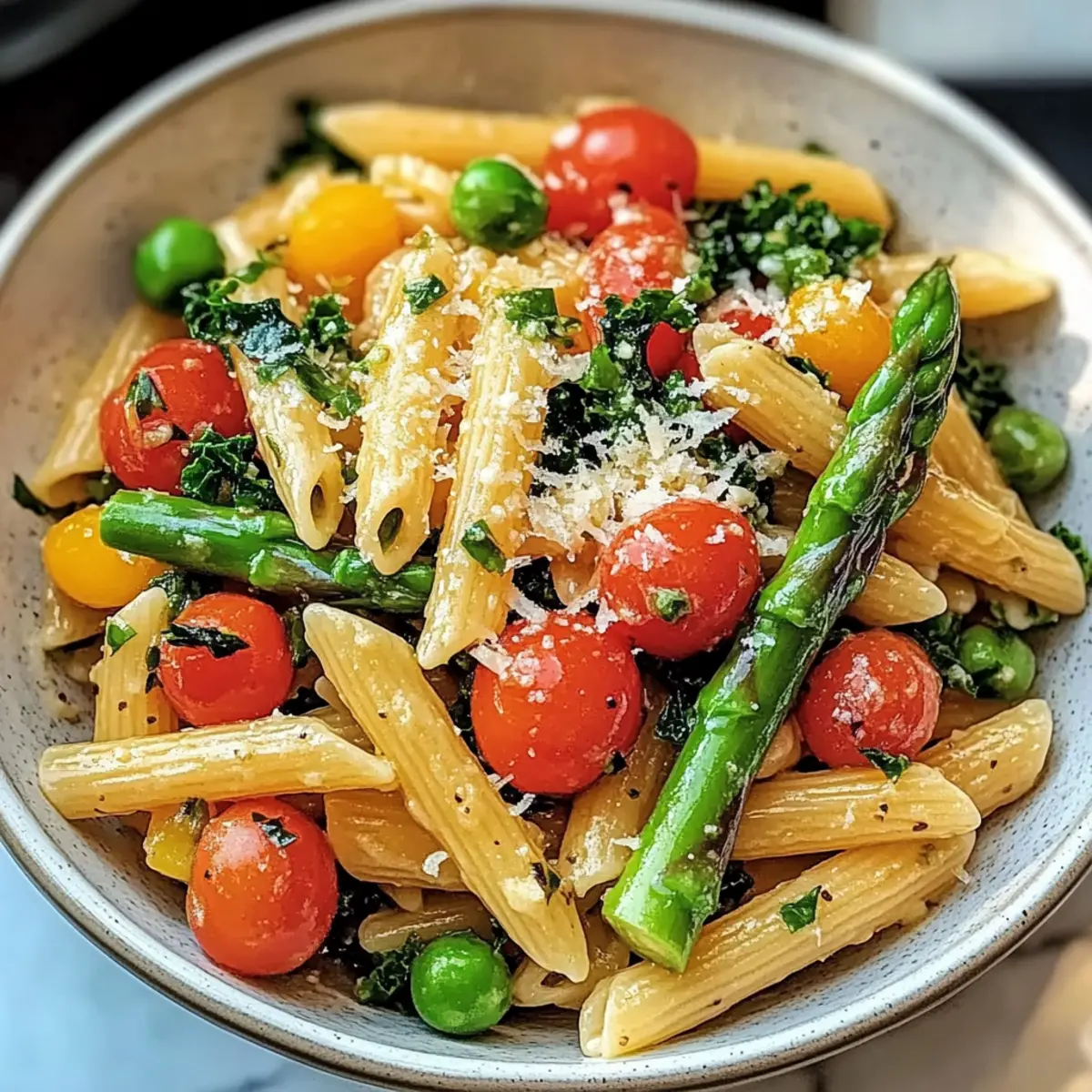
Spring Vegetable Pasta: Fresh Flavors for Your Weeknight Meal
Ingredients
Equipment
Method
- Start by washing and chopping the fresh asparagus into bite-sized pieces. Halve the grape tomatoes and dice the yellow squash. Rinse the baby kale under cold water and set aside.
- In a large pot, bring salted water to a rolling boil. Add your choice of pasta and cook until al dente, about 8-10 minutes. Reserve ½ cup of the starchy pasta water before draining.
- In a large skillet, heat olive oil over medium heat. Add finely chopped garlic and sauté for about 1 minute until fragrant.
- Add the chopped asparagus to the skillet and sauté for 3-4 minutes until slightly tender but still crisp.
- Toss in halved grape tomatoes and diced yellow squash. Continue cooking for another 3-4 minutes until the vegetables are tender.
- Stir in the washed baby kale, sea salt, and black pepper. Cook for an additional 2 minutes until the kale wilts.
- Once the vegetables are ready, add the drained pasta directly to the skillet. Incorporate the reserved pasta water as needed.
- Remove from heat and garnish with freshly chopped parsley. Serve warm.