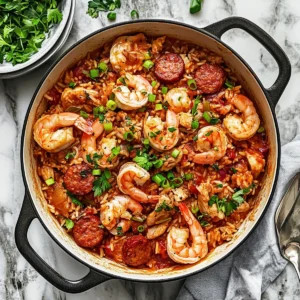

As the tantalizing aroma of spices fills the air, I’m transported to a sunny afternoon in New Orleans, where flavors dance together in perfect harmony. This Easy Creole Jambalaya with Chicken, Sausage, and Shrimp embodies that spirit, bringing comfort food right to your kitchen table. With a quick prep time and a delightful mix of ingredients, this dish transforms ordinary moments into extraordinary meals. Imagine savoring a hearty blend of tender chicken, smoky sausage, and succulent shrimp, all coated in a rich, spiced tomato broth, while your family gathers around for a taste of Cajun comfort. Whether you’re entertaining guests or simply treating yourself, this jambalaya is an effortless way to impress. Are you ready to make a dish that captures the heart and soul of Louisiana cuisine? Let’s get cooking!
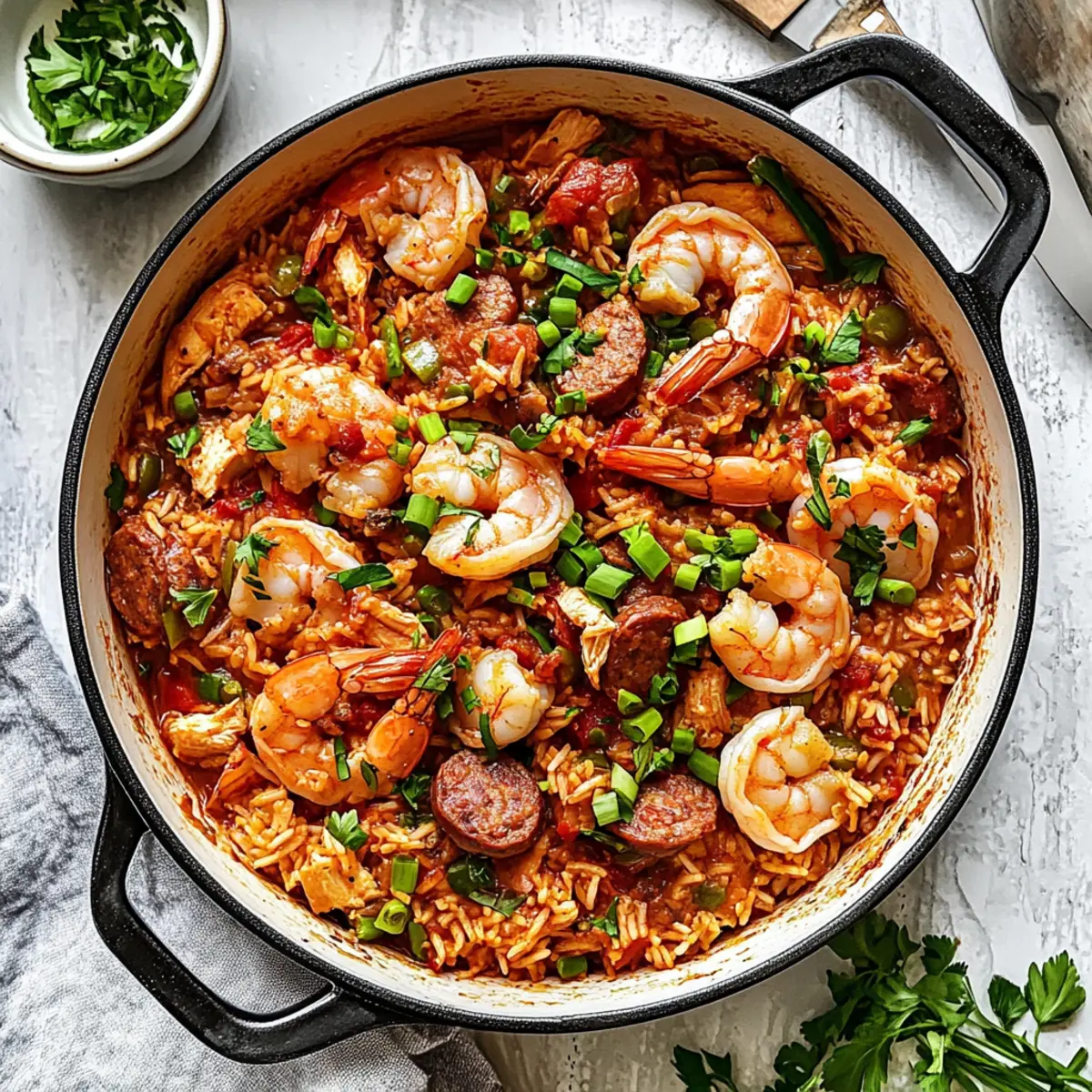
Why is Jambalaya a Must-Try?
Rich, Bold Flavors: Dive into a bowl bursting with Cajun spices that ignite your taste buds, making every bite a mouthwatering experience.
Simple Preparation: With straightforward steps, even novice cooks can whip up this comfort food classic without breaking a sweat.
Versatile Options: Customize your jambalaya by swapping proteins or adding seasonal veggies—it’s a one-pot wonder that fits any preference.
Perfect for Gatherings: Impress friends and family with this flavorful dish, ideal for parties or casual dinners, ensuring everyone leaves happy.
Meal Prep Friendly: Leftovers? No worries! Jambalaya stores well, maintaining its flavor for delicious meals throughout the week—check out our storage tips.
Jambalaya Ingredients
• Discover the essential components for a flavorful jambalaya below!
For the Base
- Extra-virgin olive oil – Adds moisture and richness to the dish; can substitute with another cooking oil if preferred.
- Uncooked long grain white rice – Creates the dish’s base; basmati or jasmine rice are recommended for the best texture.
- Crushed tomatoes (canned) – Provides moisture and a tangy flavor, typical of Creole jambalaya.
- Low-sodium chicken broth – Acts as cooking liquid and enhances flavor; vegetable broth can be used for a vegetarian option.
For the Proteins
- Boneless skinless chicken thighs – Provides protein and flavor; thighs maintain moistness, while chicken breast can be used as a lean substitute.
- Fully-cooked andouille sausage – Delivers a smoky flavor; turkey sausage is a lighter option.
- Large shrimp (peeled and deveined) – Offers seafood flavor and texture; may substitute with other seafood or more chicken.
For the Veggies
- Yellow onion – Adds aromatic sweetness and depth; substitute with shallots for a milder flavor.
- Green bell pepper – Contributes crunch and sweetness; any colored bell pepper can work.
- Celery – Provides base flavor and texture; may replace with additional bell pepper if desired.
- Garlic cloves – Enhances the overall flavor; garlic powder can be used as a substitute in lesser amounts.
For the Seasoning
- Cajun seasoning – Imparts the essential spice profile; adjust quantity for spice preference, and consider homemade for unique flavors.
- Red pepper flakes – Adds heat; can reduce or omit depending on your spice tolerance.
- Bay leaf – Adds subtle herbal flavor; can be omitted if not available.
For Garnish
- Sliced green onions and chopped parsley – Adds freshness to the dish; chives can be used as an alternative.
Step‑by‑Step Instructions for Easy Creole Jambalaya with Chicken, Sausage, and Shrimp
Step 1: Season Chicken
Begin by dicing the boneless skinless chicken thighs into bite-sized pieces. In a mixing bowl, toss the chicken with Cajun seasoning until evenly coated. This step primes the chicken with flavor that will infuse throughout the jambalaya, making it deliciously savory.
Step 2: Cook Chicken
In a large Dutch oven over medium-high heat, warm 2 tablespoons of extra-virgin olive oil. Once shimmering, add the seasoned chicken and cook for 5-7 minutes, or until browned and cooked through. As the chicken develops a lovely golden crust, remove it from the pot and set aside on a plate, allowing the flavors to meld further.
Step 3: Cook Sausage
In the same pot, add the sliced fully-cooked andouille sausage. Sauté for 3-4 minutes, stirring occasionally until browned and fragrant. This will release the smoky essence of the sausage into the pot, enriching the base flavors for your jambalaya. Once browned, transfer the sausage to the plate with the chicken.
Step 4: Sauté Vegetables
To the drippings left in the pot, add a diced yellow onion, chopped green bell pepper, and diced celery. Sauté these aromatic veggies over medium heat for 4-5 minutes until softened and translucent. When the vegetables are tender, stir in minced garlic, a pinch of Cajun seasoning, and red pepper flakes for extra spice, cooking for another minute.
Step 5: Add Rice and Liquid
Lower the heat to medium and stir in the uncooked long grain white rice, letting it toast slightly for 1-2 minutes. Next, pour in the crushed tomatoes and low-sodium chicken broth, scraping up any browned bits from the bottom. Toss in a bay leaf, then bring the mixture to a gentle simmer, reducing the heat to low. Cover and cook for 7-8 minutes, stirring occasionally until the rice absorbs the liquid.
Step 6: Incorporate Shrimp
Once the rice is al dente, gently fold in the cooked chicken and sausage along with the large shrimp. Cover the pot and turn off the heat, allowing the residual warmth to cook the shrimp through for about 4-5 minutes. Keep an eye on them and ensure they turn pink and opaque for perfect tenderness.
Step 7: Garnish and Serve
Before serving, remove the bay leaf from the pot. For a fresh finish, garnish your hearty jambalaya with slices of green onions and a sprinkle of chopped parsley. The vibrant colors and enticing aromas make this dish a true crowd-pleaser, ready to warm the hearts of your loved ones.
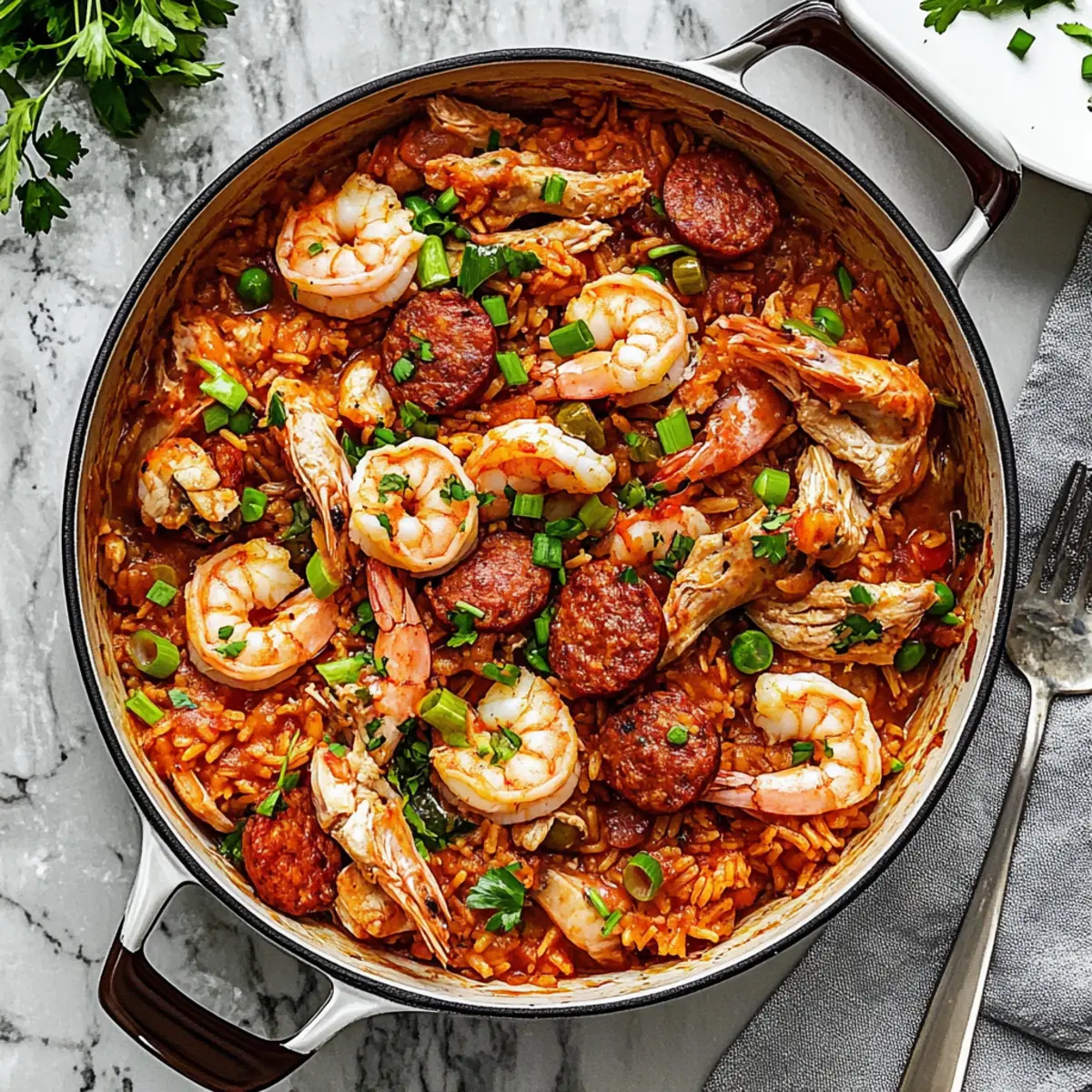
Jambalaya Variations & Substitutions
Get creative with your jambalaya, where every twist takes you on a flavor adventure!
-
Seafood Swap: Replace shrimp with scallops or clams for a different oceanic flair. Each seafood alternative offers unique textures and delightful taste that elevate the dish.
-
Healthier Sausage: Use turkey or chicken sausage instead of andouille for a leaner option without sacrificing taste. This swap keeps all the comfort while reducing calories and fat.
-
Add Extra Veggies: Include diced zucchini or carrots to boost nutrition and color. Mixing in seasonal vegetables not only enhances the dish but also makes it more hearty and filling.
-
Spicy Kick: Crank up the heat with diced jalapeños or additional red pepper flakes if you love a fiery jambalaya. Just a little added warmth can turn this dish into a spicy sensation everyone will enjoy.
-
Brown Rice Alternative: Swap in brown rice for increased fiber and a nuttier flavor. While it requires a bit more cooking time, the health benefits are worth the wait!
-
Vegan Delight: Replace chicken and shrimp with chickpeas and extra vegetables, using vegetable broth for a delicious plant-based jambalaya. This version brims with nourishment while retaining all the warmth of the original recipe.
-
Herb Enhancements: Add fresh herbs like thyme or oregano for a fragrant twist. A sprinkle at the end gives the dish a fresh taste, enhancing the overall experience.
-
Flavor Depth: Incorporate a splash of Worcestershire sauce or a hint of liquid smoke for enhanced depth. These bold flavors add a new dimension, making your jambalaya stand out at the table.
Feel free to experiment based on your taste preferences! If you’re looking for more cooking inspiration, don’t forget to check out our tips for perfect jambalaya and ideas on serving side dishes.
What to Serve with Easy Creole Jambalaya with Chicken, Sausage, and Shrimp
Create a well-rounded dining experience that complements the delightful spices and heartiness of this Cajun classic.
- Crusty French Bread: Enjoy warm, crusty bread to soak up the rich broth of the jambalaya, making each bite even more satisfying.
- Simple Green Salad: A fresh salad with mixed greens, cherry tomatoes, and a light vinaigrette offers a refreshing contrast to the dish’s heat.
- Cornbread Muffins: Sweet, buttery cornbread provides a delightful texture and sweetness that pairs perfectly with spicy jambalaya.
- Roasted Vegetables: Seasoned roasted seasonal veggies add a caramelized touch and vibrant color that enhances your meal.
- Coleslaw: A tangy coleslaw with crunchy cabbage and colorful carrots will balance the warmth of the jambalaya, adding a refreshing crunch.
- Mango Salsa: A fruity salsa brings a burst of freshness and sweetness, beautifully contrasting the savory spices of the dish.
- Beer or Sweet Tea: Pair with a cold beer or a glass of sweet tea, which can beautifully balance the dish’s spiciness while keeping you cool.
- Lemon Sorbet: For dessert, consider a light lemon sorbet; its refreshing acidity cleanses the palate after a flavorful meal.
Each of these pairings brings its unique flavors and textures to the table, making your jambalaya dinner an unforgettable experience!
Storage Tips for Jambalaya
Fridge: Store leftover jambalaya in an airtight container for up to 3 days. Ensure it cools to room temperature before sealing to prevent condensation.
Freezer: You can freeze jambalaya for up to 3 months. Make sure to use a freezer-safe container, leaving some space for expansion.
Reheating: When ready to enjoy your jambalaya, reheat on the stove with a splash of broth to restore moisture and keep it flavorful. Stir occasionally until heated through.
Portion Management: Consider freezing individual portions for quick meals on busy days. Just thaw in the fridge overnight before reheating, and enjoy the comforting flavors of Cajun cuisine!
Make Ahead Options
These Easy Creole Jambalaya bowls are perfect for meal prep, allowing you to save time on busy weeknights! You can season the chicken and cook the sausage up to 24 hours in advance; just refrigerate them separately in airtight containers. Additionally, chop the vegetables and store them in the fridge for convenience. When you’re ready to cook, simply sauté the veggies, add the rice, crushed tomatoes, and broth, then incorporate the pre-cooked chicken and sausage, cooking until the flavors meld. For a pop of freshness, add the shrimp last, allowing them to cook through in only 4-5 minutes, ensuring this hearty dish is just as delicious when prepared ahead!
Expert Tips for Perfect Jambalaya
-
Rice Choice Matters: Use long-grain rice to prevent stickiness. Stirring too much can release starch, resulting in mushy rice.
-
Avoid Overcooked Shrimp: Add shrimp at the end of cooking to keep them tender and juicy. Be mindful of cooking time—just a few minutes is all they need!
-
Proper Pot Selection: Opt for a large, heavy-bottomed pot like a Dutch oven. This ensures even cooking and allows space for all the flavorful ingredients in your jambalaya.
-
Custom Spice Levels: Adjust Cajun seasoning and red pepper flakes to match your family’s spice preferences. Don’t hesitate to taste as you go for that perfect kick!
-
Stirring Technique: Stir gently while cooking rice; too much agitation can break the grains and mess with the desired texture. Keep it light!
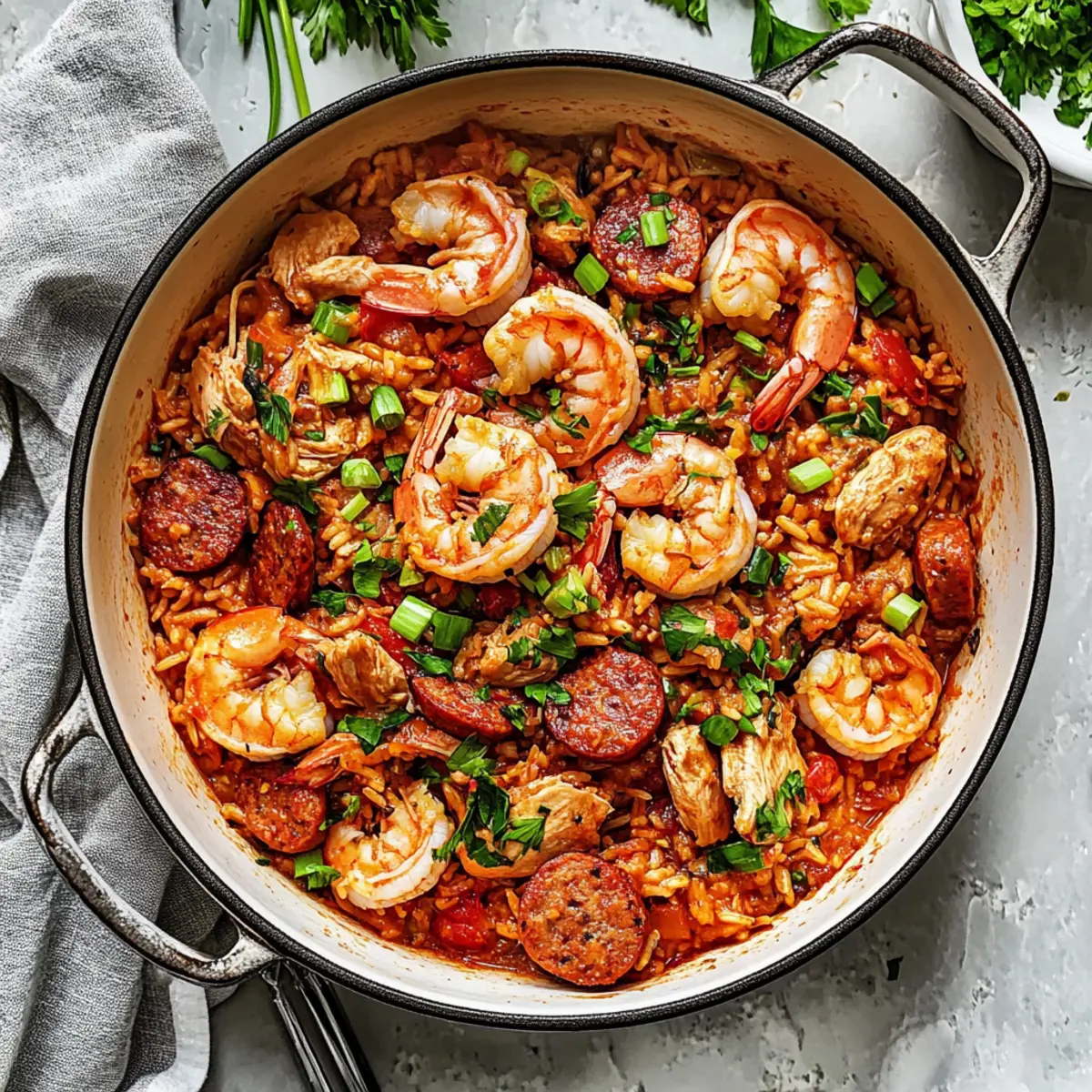
Easy Creole Jambalaya with Chicken, Sausage, and Shrimp Recipe FAQs
How do I choose the right ingredients for jambalaya?
When selecting fresh ingredients, look for vibrant bell peppers and firm tomatoes without dark spots. Chicken thighs should feel moist but not slimy, while shrimp should be plump and have a mild sea scent. If using sausage, ensure it’s tightly sealed and within its expiration date.
Advertisement
How long can jambalaya be stored in the fridge?
Absolutely! Jambalaya can be stored in an airtight container in the refrigerator for up to 3 days. Make sure to let it cool to room temperature before sealing to prevent condensation, which can make it soggy.
Can I freeze jambalaya?
Very! You can freeze jambalaya for up to 3 months. Allow it to cool completely before transferring it to a freezer-safe container or freezer bags, leaving some space for expansion during freezing. When you’re ready to enjoy it, thaw it in the fridge overnight.
What should I do if my jambalaya turns out mushy?
If your jambalaya has become mushy, it may be due to overcooking the rice or stirring too much. To avoid this in the future, use long-grain rice, which is less sticky, and gently stir the rice only when necessary. If you find that the rice is mushy when serving, try to let it sit uncovered for a few minutes to help it firm up a bit.
Are there any dietary considerations for jambalaya?
Yes, definitely! If you’re preparing jambalaya for someone with allergies, it’s wise to avoid certain ingredients. For seafood allergies, consider using chicken or turkey sausage in place of shrimp, and always check any seasoning blends for gluten or allergens that might be included. Also, for vegetarian options, substitute the broths and meats with vegetable broth and additional plant-based proteins.
How can I enhance the flavor of my jambalaya?
Enhancing the flavor is easier than you think! You can add a few bay leaves while cooking for an extra layer of depth, or try including some diced tomatoes in their juice for additional moisture and tang. Additionally, don’t shy away from adjusting the Cajun seasoning to suit your personal heat tolerance.
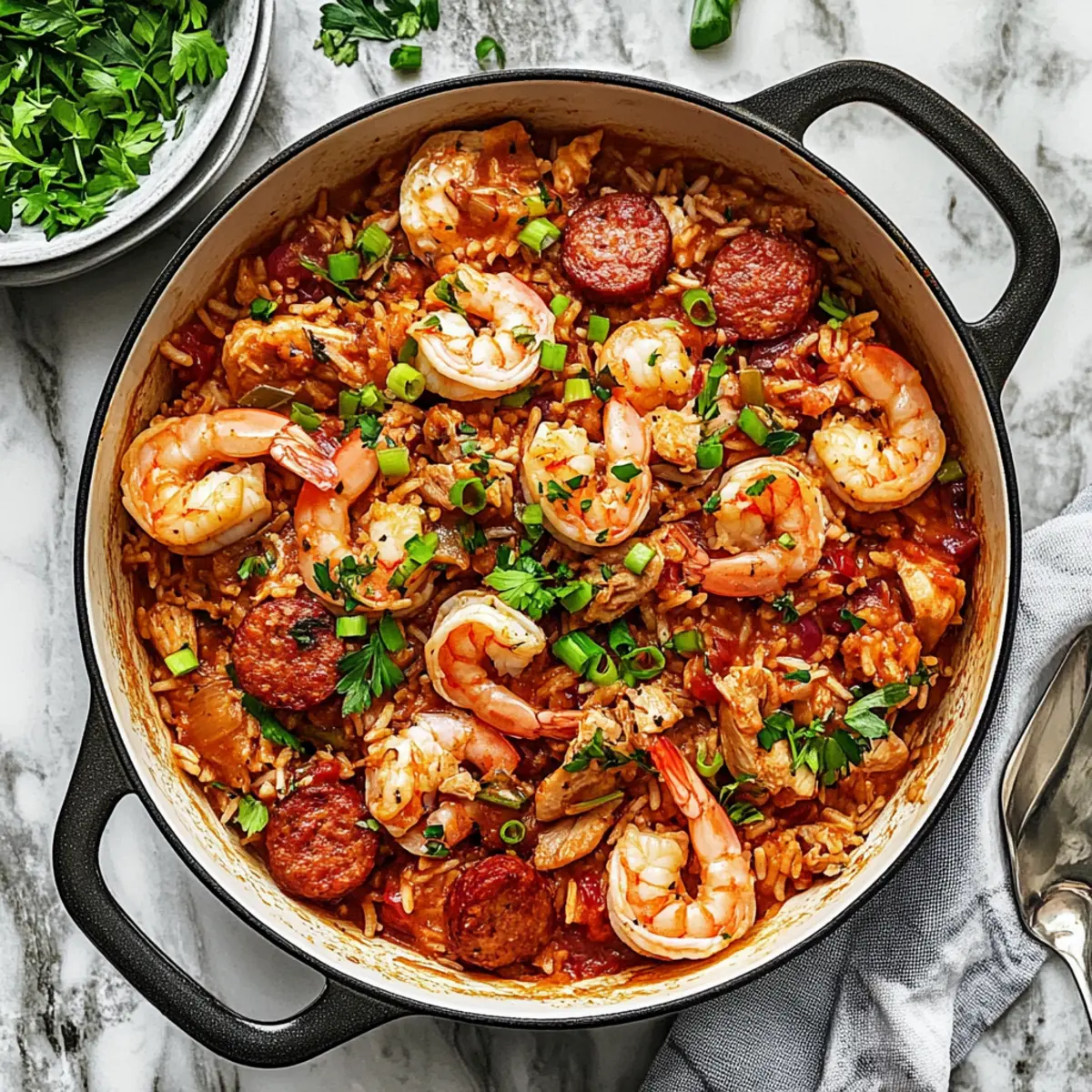
Savory Jambalaya: A Comfort Food Bowl of Flavor Adventure
Ingredients
Equipment
Method
- Dice the chicken thighs into bite-sized pieces and toss with Cajun seasoning in a bowl.
- In a Dutch oven, heat olive oil and cook the chicken for 5-7 minutes until browned.
- Sauté the sliced sausage in the same pot for 3-4 minutes until browned.
- Add diced onion, bell pepper, and celery to the pot; sauté for 4-5 minutes.
- Lower heat, stir in rice for 1-2 minutes, then add tomatoes, broth, and bay leaf. Simmer for 7-8 minutes.
- Fold in the chicken, sausage, and shrimp; cover and rest for 4-5 minutes until shrimp are cooked.
- Remove the bay leaf, garnish with green onions and parsley, and serve.