

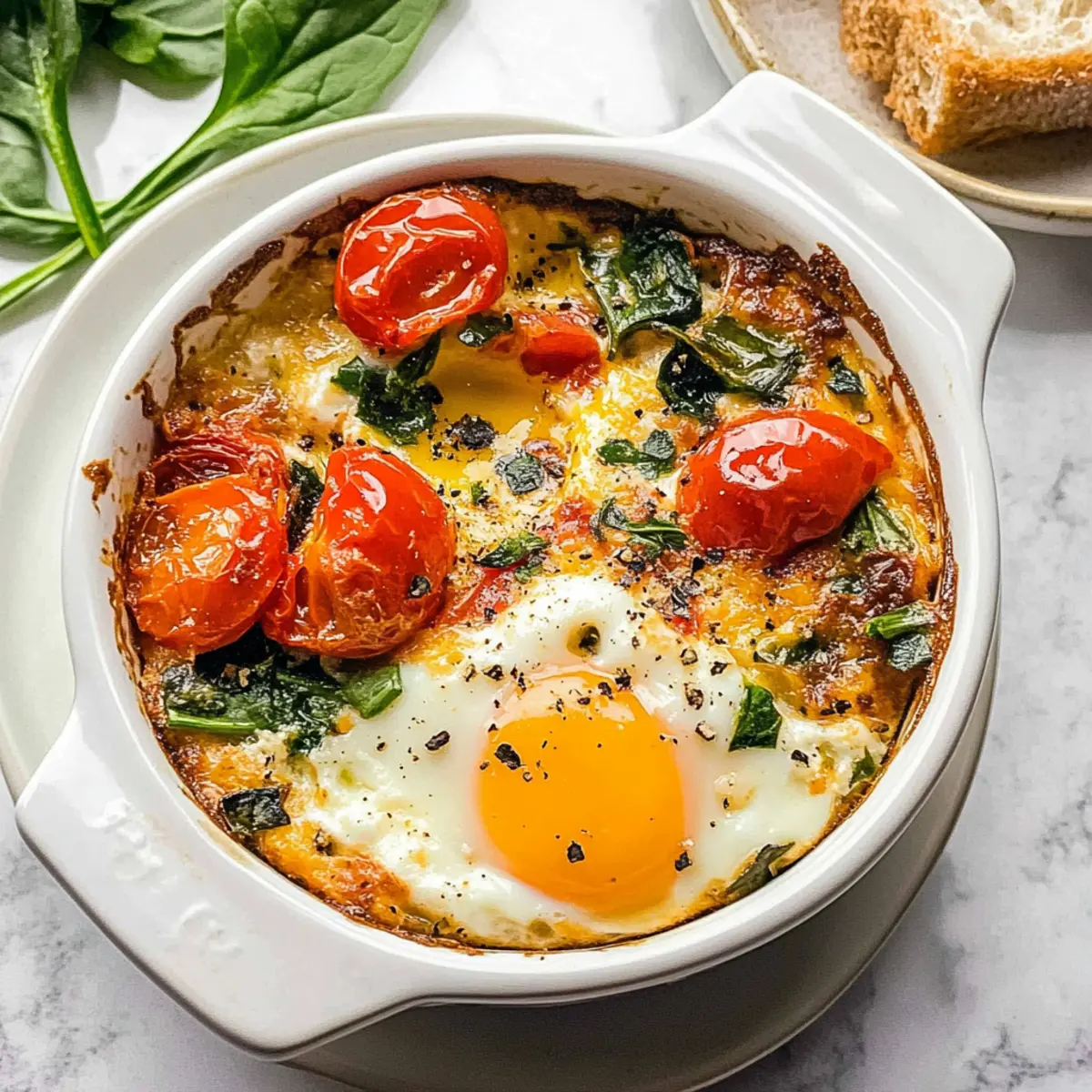
There’s something magical about the aroma of roasted garlic and fresh herbs wafting through the kitchen, instantly transporting me to a Mediterranean bistro. Today, I’m excited to share my favorite way to kick off the day: Baked Feta Eggs. This delightful recipe marries the creaminess of feta cheese with juicy tomatoes and vibrant spinach, serving up a low-carb breakfast that feels indulgent yet nourishing. Not only does it come together quickly, but it also looks stunning when served in individual ramekins—perfect for impressing guests or treating yourself to a special brunch. Are you ready to whip up a dish that transforms your mornings into something extraordinary? Let’s dive in!
Why Are Baked Feta Eggs So Special?
Irresistible aroma: The scent of roasted garlic mingling with herbs creates an inviting atmosphere that excites the senses.
Low-carb goodness: This recipe is a delicious way to enjoy a nutritious breakfast while keeping carbs in check.
Stunning presentation: Serve these baked feta eggs in individual ramekins for a beautiful display that’s sure to wow your guests!
Quick prep time: In under 45 minutes, you can have a wholesome meal on the table. If you’re also looking for another easy dish, check out my Healthy Cheesy Baked Veggie Rolls for a delightful side!
Flexibility in flavors: Feel free to adapt it with your favorite veggies or cheese—try it with goat cheese for a tangy twist!
Perfect for any occasion: Whether it’s a weekday breakfast or a festive brunch, these baked feta eggs will delight everyone at the table!
Baked Feta Eggs Ingredients
For the Vegetables
• Cherry or Grape Tomatoes – Adds sweetness and moisture; substitute with diced Roma tomatoes if unavailable.
• Red Bell Pepper – Contributes color and crunch; green bell pepper can provide a milder flavor.
• Red Onion – Provides sharpness; shallots can be used for a sweeter taste.
• Garlic – Enhances flavor depth; use garlic powder if fresh garlic isn’t on hand.
• Olive Oil – Adds richness and helps roast vegetables; avocado oil can be a lower flavor alternative.
• Dried Oregano – Brings a herby, savory note; Italian seasoning can serve as a substitute.
• Sea Salt – Enhances overall flavor; adjust to taste if sodium intake is a concern.
• Dried Thyme – Adds an earthy flavor; substitute with dried basil for a different profile.
• Black Pepper – Introduces spice; white pepper can be used if a milder heat is preferred.
• Red Pepper Flakes – Adds heat; omit or reduce for a milder version.
• Baby Spinach – Adds nutrients and color; kale or Swiss chard can be used as substitutes.
For the Eggs
• Large Eggs – The primary source of protein; egg whites or substitutes can be used for a lower cholesterol option.
Optional Garnish
• Fresh Herbs – Enhances presentation and flavor; substitute with parsley or dill based on your preference.
This simple breakdown makes it easy to gather all the necessary ingredients for these delightful Baked Feta Eggs that will brighten your mornings!
Step‑by‑Step Instructions for Baked Feta Eggs
Step 1: Preheat the Oven
Begin by preheating your oven to 400°F (200°C). This temperature is perfect for roasting the veggies and melting the feta to create that creamy texture. While the oven warms up, gather your ramekins or a baking dish, ensuring they’re oven-safe and ready for delicious baked feta eggs.
Step 2: Prepare the Vegetables
In your ramekins, evenly divide the cherry tomatoes, diced red bell pepper, chopped red onion, and minced garlic. Nestle a block of feta cheese in the center of each ramekin. Drizzle with olive oil to enhance the flavors and help the vegetables roast beautifully. This colorful mix sets the stage for your Mediterranean delight!
Step 3: Season the Mix
In a small bowl, combine the dried oregano, sea salt, dried thyme, black pepper, and red pepper flakes. Sprinkle this herb blend generously over the vegetables and feta to infuse every bite with flavor. The seasoning brings the aroma of your baked feta eggs to life, making your kitchen smell like a Mediterranean bistro.
Step 4: Bake the Vegetables
Carefully transfer your filled ramekins onto a baking sheet to catch any drips. Place them in the preheated oven and bake for approximately 25 minutes. You’ll know they are ready when the vegetables are tender and slightly caramelized, and the feta is golden and melting. This roasting step builds the foundation of savory goodness.
Step 5: Add the Spinach
After 25 minutes, take the ramekins out and give the mixture a gentle stir. Add a handful of fresh baby spinach, mixing it in with the roasted veggies. Create small wells in the mixture for the eggs to sit in, ensuring that each egg has a cozy spot waiting for them in the creamy landscape of baked feta eggs.
Step 6: Add the Eggs
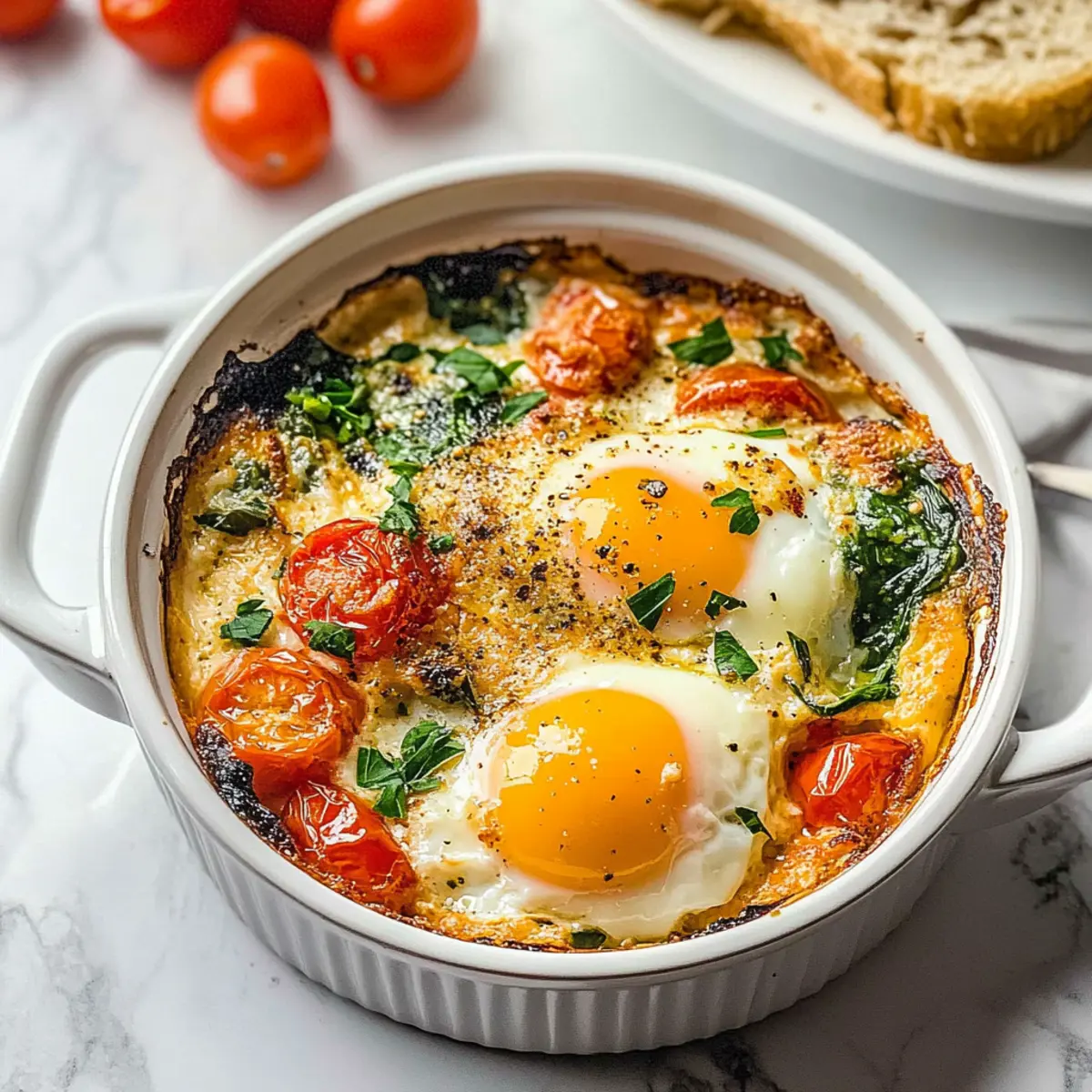
Crack a large egg into each well you’ve created in the spinach and vegetable mixture. With the oven still set at 400°F, return the ramekins to the oven and bake for an additional 10 minutes. You’re looking for the egg whites to be set while the yolks remain slightly soft. This balance is key to the perfect baked feta eggs.
Step 7: Garnish and Serve
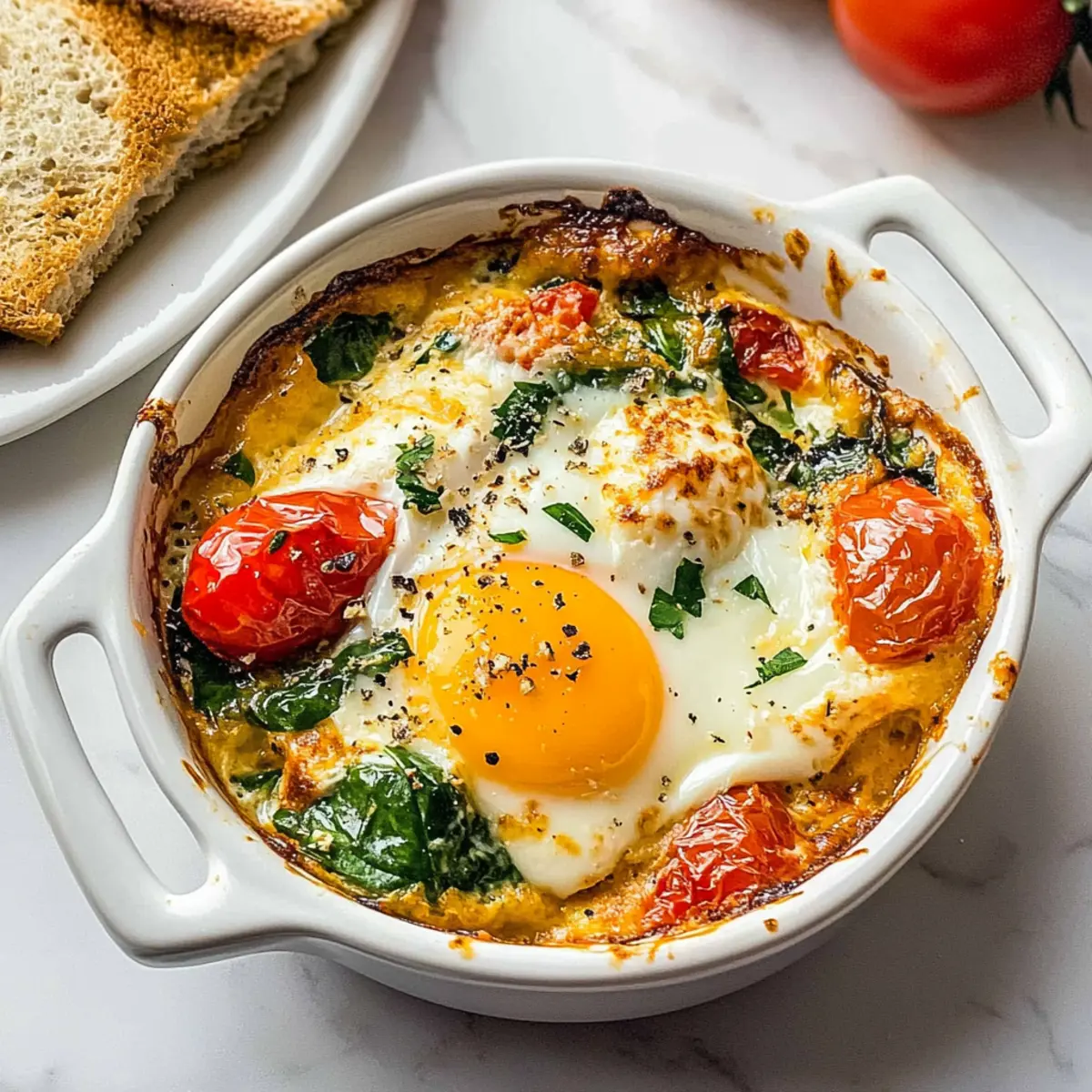
Once the eggs are cooked to your liking, remove the ramekins from the oven and let them cool for a minute. Optionally, sprinkle with fresh herbs like parsley or dill for a vibrant finish. Serve warm with a side of crusty bread for dipping into the creamy feta and luscious eggs, making it a delightful breakfast or brunch treat.
How to Store and Freeze Baked Feta Eggs
Fridge: Store any leftover baked feta eggs in an airtight container for up to 3 days. The eggs may firm up slightly after refrigeration, but the flavors will still be delightful.
Freezer: If you want to freeze baked feta eggs, it’s best to do so before adding the eggs. Prepare the veggie and feta mix, then keep it in a freezer-safe container for up to 2 months.
Reheating: When ready to enjoy, thaw the mixture in the fridge overnight. Add the eggs and bake as directed. Reheating fully cooked eggs can cause them to become rubbery, so it’s best to reheat them gently in the oven.
Meal Prep Tip: For easy meal planning, prepare the vegetable and feta mixture ahead of time and bake when you’re ready to serve. Enjoy the convenience of quick breakfasts with these baked feta eggs!
Expert Tips for Baked Feta Eggs
• Choose the Right Ramekins: Use oven-safe ramekins of at least 10 ounces to ensure even cooking and prevent overflow.
• Prep Ahead: For a quicker meal, prepare the vegetable and feta mixture in advance; just add the eggs and bake when ready to serve.
• Watch Your Timing: Keep an eye on the baking time; if using larger eggs or differing oven types, cooking times may vary slightly.
• Customize Cheese: Experiment with different cheeses like goat cheese or sharp cheddar for a unique twist; just remember that feta is the star of these baked feta eggs.
• Serve Warm: Baked feta eggs are best enjoyed fresh from the oven, accompanied by crusty bread to soak up the deliciousness.
• Avoid Soggy Spinach: Ensure the spinach is added after the initial bake to keep its vibrant color and texture intact.
What to Serve with Baked Feta Eggs?
Elevate your breakfast experience with delightful side dishes that bring out the Mediterranean flavors of your baked feta eggs.
- Crusty Baguette: Perfect for dipping, this warm bread complements the creamy feta and silky eggs, adding a satisfying crunch.
- Mixed Green Salad: A light, fresh side with crisp greens and a tangy vinaigrette balances the richness of the baked feta eggs.
- Sautéed Asparagus: Tender, seasoned asparagus adds a delightful texture and freshness, enhancing the dish’s overall vibrancy.
- Avocado Toast: Creamy avocado on toasted bread gives a rich, buttery flavor that pairs beautifully with the savory baked eggs.
- Roasted Potatoes: Crispy on the outside and fluffy inside, these seasoned potatoes provide a hearty contrast to the creamy dish.
- Herbed Yogurt Sauce: A dollop of tangy yogurt with fresh herbs brings a refreshing bite, cutting through the richness of the feta.
- Fresh Fruit Salad: Bright, juicy fruits offer a sweet contrast and a refreshing palette cleanser after the savory eggs.
- Refreshing Sparkling Water: A light, bubbly drink enhances the meal, providing a crisp finish to each bite of your delectable breakfast.
- Lemonade: This zesty beverage offers a sweet and tangy flavor pairing, perfect for a bright start to your day.
- Baklava: For a sweet ending, this flaky dessert infused with nuts and honey creates a grand Mediterranean touch to your brunch.
Baked Feta Eggs Variations & Substitutions
Feel free to make this dish your own with these tasty twists and swaps that will elevate your Baked Feta Eggs experience!
-
Leafy Green Swap: Substitute spinach with Swiss chard or arugula for a different flavor and texture combination. Both greens can add a delightful earthiness!
-
Add More Veggies: Throw in diced mushrooms or zucchini for an extra burst of nutrients and flavor. These additions enhance the overall health factor while keeping it satisfying.
-
Cheese Alternative: Try using goat cheese or sharp cheddar instead of feta to create a tangier or more intense flavor profile. Each cheese offers a unique twist that’s bound to impress!
-
Hearty Grains: Serve the baked feta eggs over a bed of cooked quinoa or farro to transform it into a heartier meal, perfect for brunch gatherings. The grains add delightful texture and make it even more filling.
-
Spice it Up: Raise the heat with jalapeños or crushed red pepper for an extra kick. A touch of spicy adds an exciting element that pairs beautifully with the creamy feta!
-
Mediterranean Twist: Incorporate sun-dried tomatoes or olives for a briny, tangy twist that enhances the Mediterranean theme of this dish. Each bite will transport you to a sun-soaked rooftop café.
-
Egg Options: For a lower-cholesterol version, use egg whites or a plant-based egg substitute like aquafaba to achieve a similar texture without the yolks. It’s a clever swap without compromising on flavor!
Don’t forget to check out other delicious options to pair with your baked feta eggs, like these Healthy Cheesy Baked Veggie Rolls or consider serving them alongside Baked Chicken Cordon for a full meal that’s both satisfying and oh-so-delicious!
Make Ahead Options
These Baked Feta Eggs are a lifesaver for busy mornings! You can prepare the vegetable and cheese base up to 24 hours in advance. Simply follow the instructions to chop and layer the tomatoes, bell pepper, onion, and feta in your ramekins, drizzling them with olive oil before covering and refrigerating. To maintain that delicious creamy texture, avoid adding the eggs until you’re ready to bake. When you’re set to indulge in your meal, create wells in the mixture, crack in the eggs, and bake for an additional 10 minutes for perfectly cooked baked feta eggs. With this strategy, you can enjoy a restaurant-quality breakfast with minimal effort!
Baked Feta Eggs Recipe FAQs
What kind of tomatoes should I use for baked feta eggs?
I recommend using cherry or grape tomatoes for their sweetness and moisture, but if you can’t find them, diced Roma tomatoes work perfectly. Just make sure they’re ripe for the best flavor!
Advertisement
How should I store leftover baked feta eggs?
Leftover baked feta eggs can be stored in an airtight container in the fridge for up to 3 days. Keep in mind that the eggs may firm up in texture when cooled, but they will still be delicious when reheated gently in the oven.
Can I freeze baked feta eggs?
Yes, you can prep the vegetable and feta mixture and freeze it! Store it in a freezer-safe container for up to 2 months. Just make sure to add the eggs fresh before baking. When you’re ready to eat, thaw the mixture overnight in the fridge, and then add the eggs and bake according to the recipe instructions.
What can I do if my baked feta eggs are too watery?
If your baked feta eggs turn out watery, it might be due to excess moisture from the vegetables. To prevent this, ensure the veggies are well-drained and avoid overcooking them before adding the eggs. You can also try using less olive oil or opt for firmer vegetables to absorb moisture.
Is this recipe suitable for people with egg allergies?
Unfortunately, this recipe is not suitable for those with egg allergies, as eggs are a key ingredient. However, you can explore egg substitute options like tofu or chickpea flour for a similar texture, but the flavor will differ. I often recommend doing a bit of experimentation to find a best fit!
Can I make baked feta eggs vegetarian?
Absolutely! This dish is already vegetarian-friendly since it features wholesome veggies like spinach and tomatoes. Just make sure to use a vegetarian cheese option, and feel free to add more vegetables to enhance the dish!
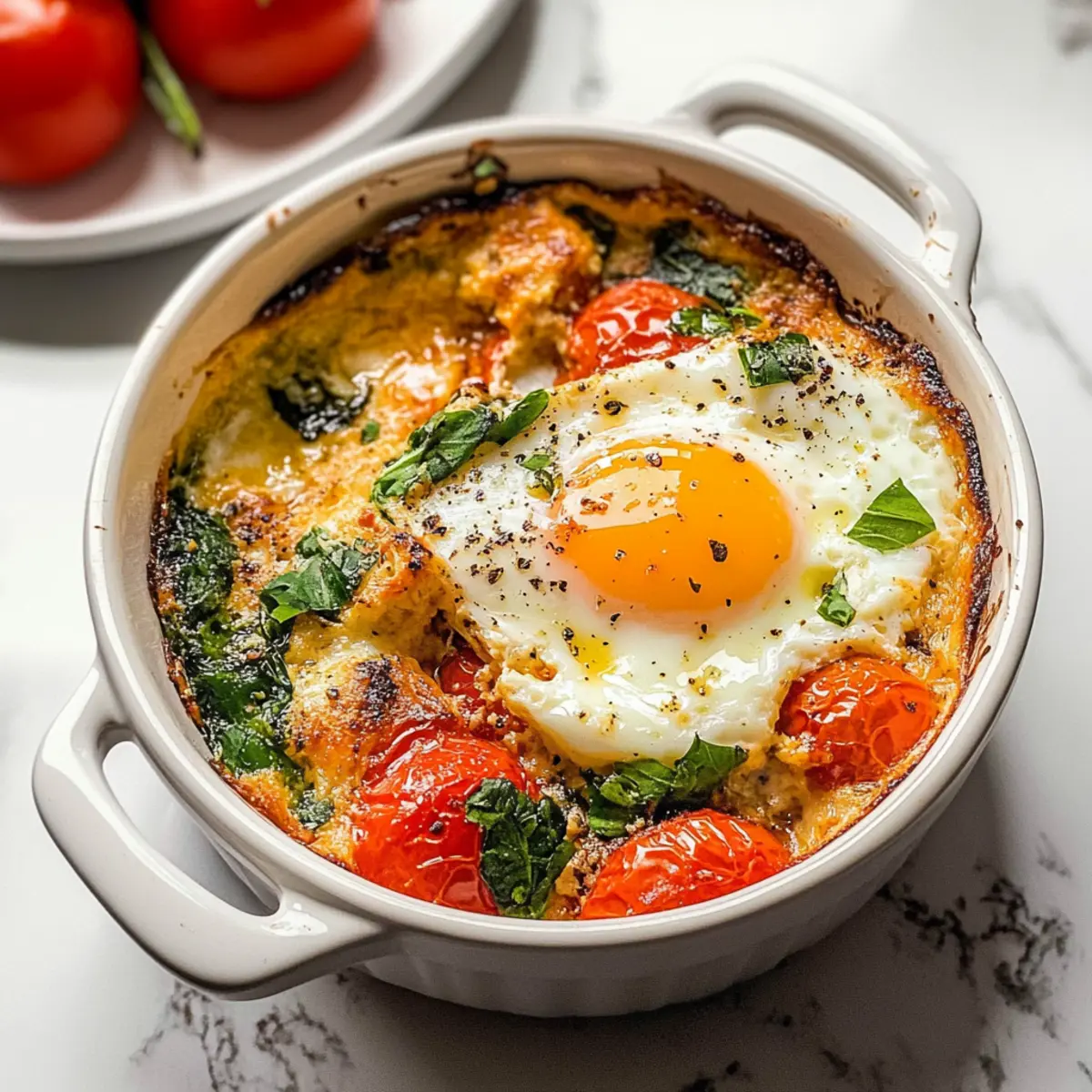
Savory Baked Feta Eggs: A Creamy Mediterranean Delight
Ingredients
Equipment
Method
- Preheat your oven to 400°F (200°C). Gather oven-safe ramekins or a baking dish.
- In your ramekins, evenly divide the cherry tomatoes, diced red bell pepper, chopped red onion, and minced garlic. Place a block of feta cheese in the center of each ramekin and drizzle with olive oil.
- Combine the dried oregano, sea salt, dried thyme, black pepper, and red pepper flakes. Sprinkle this over the vegetables and feta.
- Transfer the ramekins onto a baking sheet and bake for approximately 25 minutes.
- Remove the ramekins and gently stir. Add baby spinach and create wells for the eggs.
- Crack a large egg into each well and return to the oven, baking for an additional 10 minutes.
- Once cooked to your preference, let the ramekins cool slightly and garnish with fresh herbs before serving.